Our Distinguished Advisory Board
Guided by leaders in technology, healthcare, ethics, and national security.
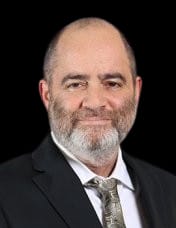
Prof. Gadi Segal
Medical Manager, Sarah Platform | Head of Internal Telemedicine, Sheba Medical Center | Chair, Israeli Society for Hospital-at-Home
A visionary leader in telemedicine and remote patient monitoring from the world's medical elite. As Head of Internal Telemedicine at Sheba Medical Center—ranked #8 globally by Newsweek in 2025 and recognized as one of the World's Best Hospitals for seven consecutive years—Prof. Segal represents the pinnacle of international medical excellence. He pioneered groundbreaking studies proving wearable telehealth technology can detect patient deterioration 29-38 hours before medical staff, with 67-75% accuracy in early warning detection. Through Sheba Beyond's revolutionary "virtual hospital" program, he delivered remote medical care to Ukrainian refugees, demonstrating how advanced telemedicine can provide tertiary medical center quality care globally. As Associate Clinical Professor at Tel Aviv University, Associate Dean for University of Nicosia Medical School, and Chairman of Israel's Ministry of Health Committee for Clinical Trials, he brings unparalleled regulatory expertise and world-class clinical excellence to guide the Sarah Platform's ethical implementation.

Dr. Ahuva Spitz, RN, CEN
Leading Nursing Educator & Researcher | Senior Lecturer, Lev Academic Center School of Nursing | Jerusalem Health Council Member
A distinguished expert in nursing and community health with extensive clinical experience as an ER nurse and leadership roles. Former Head of the School of Nursing at Lev Academic Center (2020-2024), she serves as Academic Advisor in Nursing Administration and Helsinki Committee member at Shaare Zedek Medical Center. Her groundbreaking doctoral research examines the experiences of ultra-Orthodox mothers caring for children with Type 1 diabetes, contributing vital insights into culturally competent care within Israeli society. As a member of the National Diabetes Council and chair of advisory committees updating clinical protocols, she shapes national health policy. Her recent appointment to Jerusalem's Health Council reflects her unique expertise in bridging clinical practice, academia, and public health policy for Israel's diverse communities.

Prof. Moshe Shoham
The Father of Modern Medical Robotics | Professor Emeritus, Technion | US National Academy of Engineering Member
A living legend in medical robotics who revolutionized modern surgery. Prof. Shoham invented the world's first commercially available robotic guidance system for spine surgery, founded Mazor Robotics (acquired by Medtronic for $1.64 billion—Israel's largest biotech acquisition), and created the groundbreaking ViRob—an autonomous micro-robot smaller than 1mm that can crawl through blood vessels and body cavities with unprecedented precision. As an International Member of the US National Academy of Engineering and holder of over 100 patents across 200+ scientific papers, he has supervised 45 graduate students who now lead the global medical robotics industry. His recent ventures include ForSight Robotics for ophthalmic surgery and Tamar Robotics for endoscopic procedures, continuing to push the boundaries of what's possible in robotic-assisted medicine.

Prof. Nachum Dershowitz
Professor Emeritus of Computer Science and AI at Tel Aviv University, with graduate degrees from the Weizmann Institute
An international authority on program verification and equational reasoning and has made major contributions in computational health and computational humanities. He has authored or coauthored over 200 research papers and several books and has won numerous awards for research and teaching, including the Herbrand Award for Distinguished Contributions to Automated Reasoning and the Choice Outstanding Academic Title Award for the book, Calendrical Calculations.
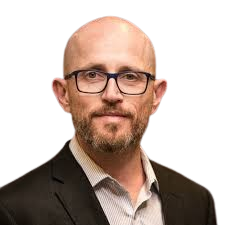
Israel Baron
cybersecurity expert
With over 20 years of experience securing critical infrastructure and transportation systems. He has served as CISO of Israel Railways, VP Business Development at Cervello, and a senior cyber officer in Israel’s Ministry of Defense. Today, he consults governments and infrastructure operators on OT security, regulatory compliance, and cyber resilience. He also leads the Cybersecurity Program at the Technion School of continuing education.
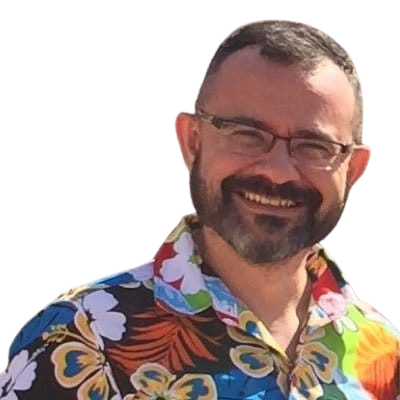
Mr. David Khosid
AI and Robotics Expert, AI Lead at ForSight Robotics, Former Google DeepMind Researcher
An expert in embodied intelligence, reinforcement learning, and real-time decision-making systems. He currently leads AI initiatives at ForSight Robotics, focusing on surgical automation, and previously worked at Google DeepMind on frontier challenges in AI research. David has also contributed to space exploration programs. His work bridges research and deployment in surgical robotics, robotic manipulation, and aerospace, with a strong focus on applying intelligent systems in complex, mission-critical domains. Simulation plays a central role in his approach to developing intelligent robotic systems. David brings both technical depth and strategic perspective, approaching his work as both an art and a science. He has also mentored student teams in the FIRST Robotics Competition, helping the next generation discover the creative and exploration-driven nature of technology. As a curious fact, David's home in Jerusalem is just across from Yad Sarah's main building, where he often observes its daily flow of volunteers, visitors, and care. He considers Yad Sarah a true gem of Jerusalem and an inspiring model of compassionate innovation.
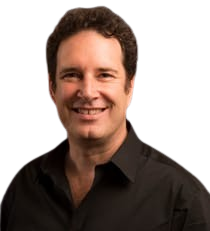
Prof. Hod Lipson
A Columbia University Professor and Chair of the Mechanical Engineering Department.
An award-winning researcher, teacher, and communicator, Lipson enjoys sharing the beauty of robotics though his books, essays, public lectures, and radio and television appearances. He is a professor of Mechanical Engineering and Data Science at Columbia University, where he directs the Creative Machines Lab, which pioneers new ways to make machines that create, and machines that are creative. Before joining Columbia University in 2015, Lipson spent 14 years as a professor at Cornell University. He received his PhD in 1999 from the Technion – Israel Institute of Technology, followed by a postdoc at Brandeis University and MIT. His work on self-aware and self-replicating robots challenges conventional views of robotics and has enjoyed widespread media coverage. He has also pioneered open-source 3D printing, as well as electronics 3D printing, bio-printing and food printing. Lipson has co-authored over 300 publications that received over 14,000 citations to date. He has co-founded four companies, and is frequent keynoter at both industry and academic events. His TED Talk on self-aware machines is one of the most viewed presentations on AI and robotics.
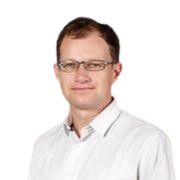
Dr. Lior Tabansky
Head of research development at Blavatnik Interdisciplinary Cyber Research Center, Tel Aviv University.
Dr. Lior Tabansky offers a unique cybersecurity grasp, combining academic research in International Relations, 15 years of IT-pro work, and business experience in formulating cyber strategies for nations and enterprises in Asia, Africa, and Europe. Dr. Lior Tabansky is the Head of research development at Blavatnik Interdisciplinary Cyber Research Center, Tel Aviv University, and the academic director of the “Effective Cybersecurity” Executive Education program. Dr Tabansky researches the intersection of technology and power, including defense innovation, strategy of small states, hostile influence operations via Social Media, and cyber capability maturity. Dr. Tabansky leads the “PROGRESS - Promoting Global cyber Resilience for Sectors and Society” research to model and analyze a sector of the economy as a whole. The World Bank published the new methodology, Sectoral Cybersecurity Maturity Model, based on the PROGRESS and is deploying it to facilitate cost-effective digital transformation for sustainable development worldwide. “Cybersecurity in Israel,” Lior's 2015 book co-authored with Professor Isaac Ben-Israel, is the first comprehensive "insider" account of decades of Israeli policy and operations.

Prof. David Peleg
A Professor of Computer Science, Weizmann Institute.
Holding the Norman D. Cohen Professorial Chair of Computer Sciences, and the present dean of the Faculty of Mathematics and Computer Science in Weizmann Institute. His main research interests are algorithms, computer networks, and distributed computing. Many of his papers deal with a combination of all three. He has published numerous papers and a book, chaired leading conferences in computer science, and is an editor of several scientific journals. In 2008, he was awarded the Edsger W. Dijkstra Prize in Distributed Computing along with Baruch Awerbuch for their 1990 paper “Sparse partitions.” In 2011, he won the SIROCCO Prize for Innovation in Distributed Computing, awarded annually at the SIROCCO conference. In 2017 he became a Fellow of the Association for Computing Machinery. Since 2020, Peleg is editor-in-chief of the journal Information and Computation.
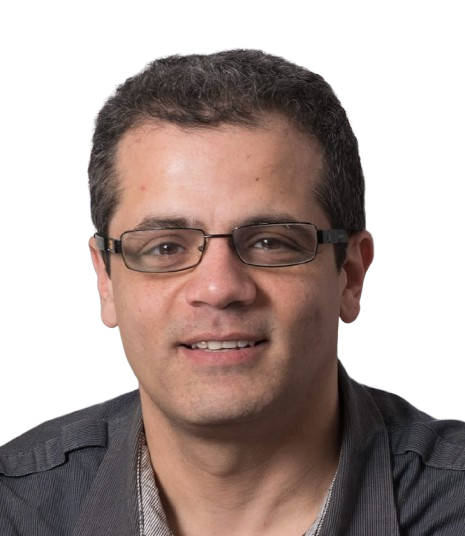
Prof. Lior Rokach
A Software and Information Systems Engineering, Ben-Gurion University of the Negev.
A data scientist and a professor of Software and Information Systems Engineering. He currently serve as the chair of the Department of Software and Information System Engineering. He have established the machine learning lab and the big data lab which promote innovative adaptations of machine learning and data science methods to create the next generation of intelligent systems. He currently serve as an editorial board member of ACM TIST and an area editor for Information Fusion (Elsevier). His research interests lie in the areas of Data Science, Machine Learning, Big Data, Deep Learning and Data Mining and their applications to: Recommender Systems Cyber Security Information Retrieval Information Extraction Medical Informatics.
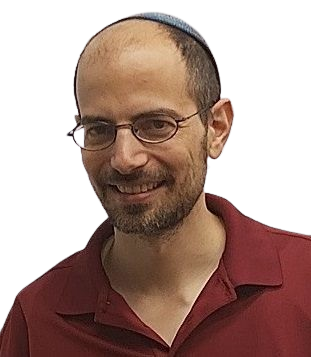
Prof. Amos Azaria
An associate professor at Ariel University.
B.A. degree in computer science from the Technion Institute of Technology, Haifa, Israel, in 2004, a PhD degree from Bar Ilan University, Ramat Gan, Israel in 2015 and was a post-doctoral fellow at CMU, Pittsburgh PA in the Machine Learning Department. After completing the Bachelor's degree he spent several years in the industry, some of which included working with Microsoft R\&D Haifa, Israel. Azaria has co-authored over 100 papers, has won the Victor Lesser distinguished dissertation award for 2015, and was a member of the winning team of the DARPA SMISC competition, 2015 on bot detection. His research interests include large language models, human-agent interaction, deep learning, human aided machine learning and natural language processing.
Prof. Michael Zibulevsky
A researcher at the Department of Computer Science, Technion – Israel Institute of Technology.
holds a D.Sc. in Operations Research from the Technion and an M.Sc. in Electrical Engineering from MIIT, Moscow. A pioneer in Sparse Component Analysis, his research spans numerical optimization, deep neural networks, and their applications to signal and image processing. In recent years, he has been particularly focused on AI-driven solutions.

Dr. Ytzhak Spilberg
AI & Digital Health Expert
A thought leader in the integration of AI technologies in healthcare, with a focus on ethical implications and patient outcomes.
Partner with us to establish Israel as the global leader in responsible healthcare technology while advancing human dignity and medical excellence.
Contact Our Executive Team